Many people want to become stronger, but they do not always want heavy gym routines, fast circuits, or high-impact workouts. This is where the pilates reformer becomes useful. It gives the body resistance, support, and feedback at the same time, helping students build strength through controlled movement rather than speed or force.
The Reformer looks like a machine, but its purpose is not only exercise equipment. It is a guided movement system. The moving carriage, springs, straps, and footbar help students understand how the body moves, where control is missing, and how to build strength with better alignment.
Why Controlled Strength Matters
Strength is not only about how much weight a person can lift. Real strength also includes control, balance, stability, and coordination. A person may be strong in one movement but still struggle with posture, core control, or joint alignment.
Reformer Pilates trains strength in a more detailed way. The body must control the carriage as it moves. The springs create resistance, but the student must manage that resistance smoothly. This teaches the muscles to work with precision.
For adults who sit for long hours, this type of training can be especially useful. The body often becomes stiff in some areas and weak in others. Controlled strength helps restore better movement patterns.
How the Reformer Supports the Body
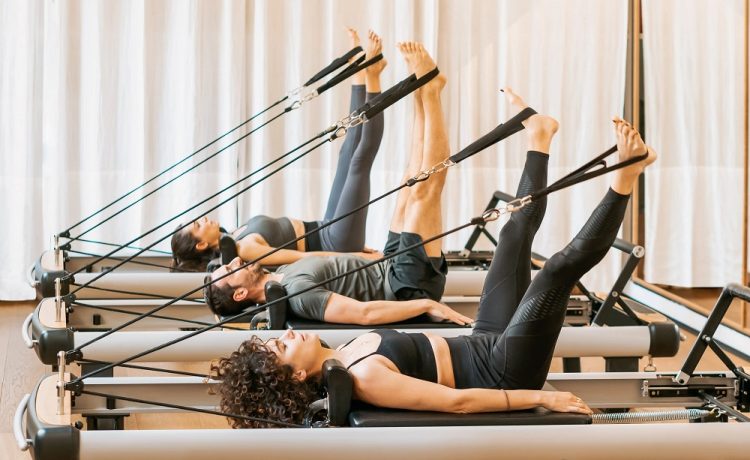
One of the biggest advantages of the Reformer is support. Many exercises are done lying down, seated, kneeling, or standing with assistance from the machine. This allows students to focus on movement quality without feeling unsupported.
For example, leg work on the footbar can train the lower body while the spine remains supported. Strap work can strengthen the arms and shoulders while teaching core stability. Core exercises can be adjusted based on the student’s ability.
This makes the practice suitable for many people, including beginners and those returning to fitness after a break.
Spring Resistance Makes Training Adjustable
The springs on the Reformer can be changed to create different levels of resistance. This makes the practice highly adaptable. A teacher can reduce resistance for control work or increase it for strength challenge.
This adjustability is important because not every student needs the same intensity. Someone new to movement may need more support. Someone stronger may need more challenge. The Reformer allows both to work safely within their level.
That flexibility is one reason Reformer Pilates can stay useful as students progress.
Core Stability in Every Exercise
The core is involved in almost every Reformer movement. It supports the spine, pelvis, ribs, and posture while the arms and legs move. This makes the core training more functional than isolated abdominal exercises.
When the carriage moves, the body has to stabilize. If the core is not active, the movement becomes shaky or uncontrolled. This feedback helps students understand where strength is needed.
Over time, better core control may improve posture, balance, and everyday movement comfort.
Better Alignment for Daily Life
Reformer Pilates teaches alignment through repetition and feedback. Students learn how the feet, knees, hips, spine, shoulders, and head relate to one another.
This matters outside class. A person may begin noticing how they stand, walk, sit, and carry bags. They may become more aware of leaning to one side or gripping the shoulders during stress.
Better alignment does not mean becoming stiff. It means the body learns to move with less unnecessary strain.
Low-Impact Does Not Mean Easy
Many people underestimate Reformer Pilates because it is low-impact. There is no jumping or pounding, but the exercises can be deeply challenging. Slow movement often requires more control than fast movement.
A simple leg press, arm pull, or core sequence can feel intense when done with proper alignment. The body cannot hide behind momentum. It must work with intention.
This makes Reformer Pilates suitable for people who want serious strength without the harsh feeling of high-impact workouts.
Who Can Benefit From the Reformer?
Reformer Pilates may benefit office workers, beginners, active adults, people wanting posture support, and those who prefer guided strength training. It can also complement yoga, walking, gym workouts, running, or sports.
People with injuries, medical restrictions, or ongoing pain should inform the teacher and seek medical advice where needed. The Reformer is adaptable, but correct guidance is important.
Building a Sustainable Routine
The best fitness routine is one a person can maintain. Reformer Pilates can become sustainable because it is structured, progressive, and adaptable. Students can begin with basic control and gradually build strength.
With consistent practice, they may notice better posture, stronger core engagement, improved movement confidence, and less stiffness from daily routines.
For people in Singapore who want controlled strength, better alignment, and guided movement, Yoga Edition can support a Reformer Pilates routine that builds strength in a smarter and more sustainable way.
FAQs
Why does the moving carriage make simple exercises feel harder?
The carriage adds instability. Your body must control movement from start to finish instead of relying on a fixed surface. This makes small stabilizing muscles work harder.
Can Reformer Pilates help if I feel weak after long sitting hours?
Yes, it can help rebuild strength and body awareness, especially around the core, hips, legs, and posture muscles. Consistency matters more than doing one very intense session.
Should I start with mat Pilates before using the Reformer?
Not always. Many beginners start directly with the Reformer because the machine offers support and guidance. A teacher can adjust the session to your level.