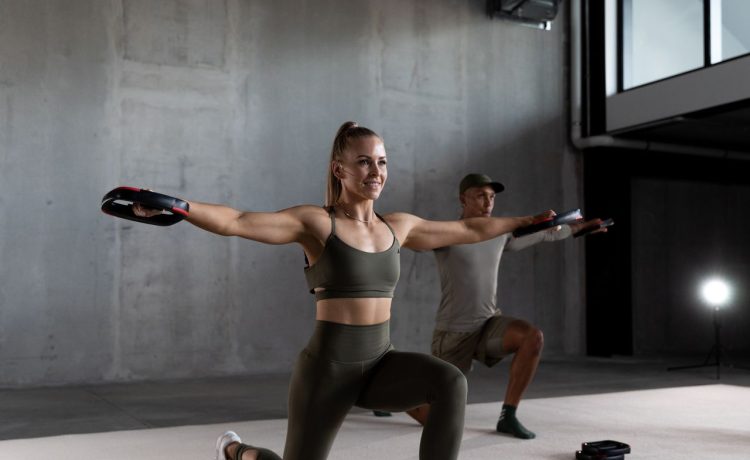
The training philosophy that underpins every bodypump class is one that exercise science has validated comprehensively over the past decade, even as commercial gym culture remained focused on heavier loading as the primary hypertrophy driver. BodyPump’s muscular endurance model, which uses light to moderate loads across high repetition ranges performed to close proximity to muscular failure, produces a specific type of hypertrophic adaptation characterised by lean muscle development without the significant body mass increases associated with maximal loading protocols.
The Science Behind High-Repetition Hypertrophy
The historical assumption that significant muscle development requires heavy loading, specifically above seventy percent of one-repetition maximum, was overturned by a series of influential studies in the early 2010s demonstrating equivalent hypertrophy from light loads taken to muscular failure compared to heavy loads at lower repetitions. The mechanism underlying this equivalence is the recruitment of high-threshold motor units that occurs as lighter loads are continued beyond the point where lower-threshold motor units are fatigued.
When a participant in a BodyPump class continues performing squats or chest presses beyond the point where the initial pool of recruited motor units is fatigued, the nervous system progressively recruits additional higher-threshold motor units to continue the movement. By the final repetitions of a high-repetition set taken close to failure, virtually all available motor units in the working muscle are recruited, creating the same comprehensive motor unit activation that maximal loading achieves at far lower repetition counts.
The Metabolic Stress Contribution
High-repetition training at BodyPump’s characteristic loads produces significant metabolic stress in the working musculature through lactate and hydrogen ion accumulation that disrupts cellular homeostasis in ways that drive hypertrophic signalling through pathways distinct from mechanical tension. This metabolic stress component is substantially greater in high-repetition training than in low-repetition heavy loading, providing an additional hypertrophic stimulus that partially compensates for any mechanical tension advantage that heavier loading carries.
The combination of comprehensive motor unit recruitment in the final repetitions of high-repetition sets with the significant metabolic stress accumulated across the full repetition range explains how BodyPump’s muscular endurance model produces genuine hypertrophic adaptation despite the absence of the heavy loading that older training dogma considered essential.
Why BodyPump Hypertrophy Is Characteristically Lean
The specific character of BodyPump-induced hypertrophy, lean muscle development without significant body mass addition, reflects the interaction between the format’s training stimulus and the typical participant’s body composition management.
High-repetition training at BodyPump loads produces a training stimulus that elevates caloric expenditure both during sessions and through post-exercise metabolism in ways that heavy low-repetition training at equivalent muscle groups does not replicate. The sustained muscular effort across many repetitions creates a cardiovascular demand alongside the resistance training stimulus that heavy lifting does not generate, effectively combining muscular development with cardiovascular expenditure in a single training format.
This dual stimulus produces lean hypertrophy rather than mass gaining because the caloric expenditure of the cardiovascular component prevents the caloric surplus that would otherwise accompany aggressive hypertrophy-focused training. Participants develop muscular definition and modest mass increases rather than significant weight gain, which aligns with the body composition goals of the majority of Singapore’s BodyPump participant demographic.
True Fitness Singapore’s BodyPump classes are programmed and delivered at the standard that produces the lean hypertrophic outcomes the format’s science supports. True Fitness Singapore provides the class environment where consistent participation translates the format’s physiological logic into visible body composition changes for members who attend regularly and manage their nutrition appropriately.
FAQs
Q. – How heavy should I go in BodyPump to maximise hypertrophy without compromising technique?
Ans. – The appropriate load produces genuine muscular challenge in the final quarter of each track’s repetitions while allowing technique maintenance throughout. If you can complete the final repetitions comfortably without significant effort increase, your load is too light for hypertrophic stimulus. If technique breaks down before the track ends, reduce load until you can complete full tracks with quality movement.
Q. – Can BodyPump build significant muscle for someone who has never done resistance training before?
Ans. – Yes, substantially. Beginners experience the largest hypertrophic responses to any resistance training stimulus because they start from a low baseline. BodyPump produces particularly rapid early results for beginners because their motor unit recruitment and neuromuscular efficiency improve dramatically alongside the structural muscle adaptations of the first eight to twelve weeks.
Q. – How does BodyPump compare to traditional three-sets-of-ten resistance training for muscle development?
Ans. – For beginners and intermediate trainees, BodyPump produces comparable hypertrophy to traditional moderate-volume resistance training when effort is equivalent. For advanced trainees seeking maximum hypertrophy, traditional programming with heavier loading and greater volume individualisation ultimately produces superior results because BodyPump’s format constraints limit the progressive overload that advanced development requires.
Q. – Why do I not feel as sore after BodyPump as after heavy weight training?
Ans. – Delayed onset muscle soreness correlates with the magnitude of eccentric muscle damage, which is greater from heavy eccentric loading than from the lighter loads of BodyPump. Lower post-session soreness does not indicate a weaker training stimulus, as the metabolic and motor unit recruitment stimuli of BodyPump produce hypertrophy through pathways that create less muscle damage than heavy eccentric loading.
Q. – How many BodyPump sessions per week are needed to produce visible body composition changes?
Ans. – Two sessions per week produces meaningful body composition changes within eight to twelve weeks for most participants when dietary protein intake is adequate. Three sessions per week accelerates the timeline and allows each session to target different muscle group emphases across the week’s varying track focus.